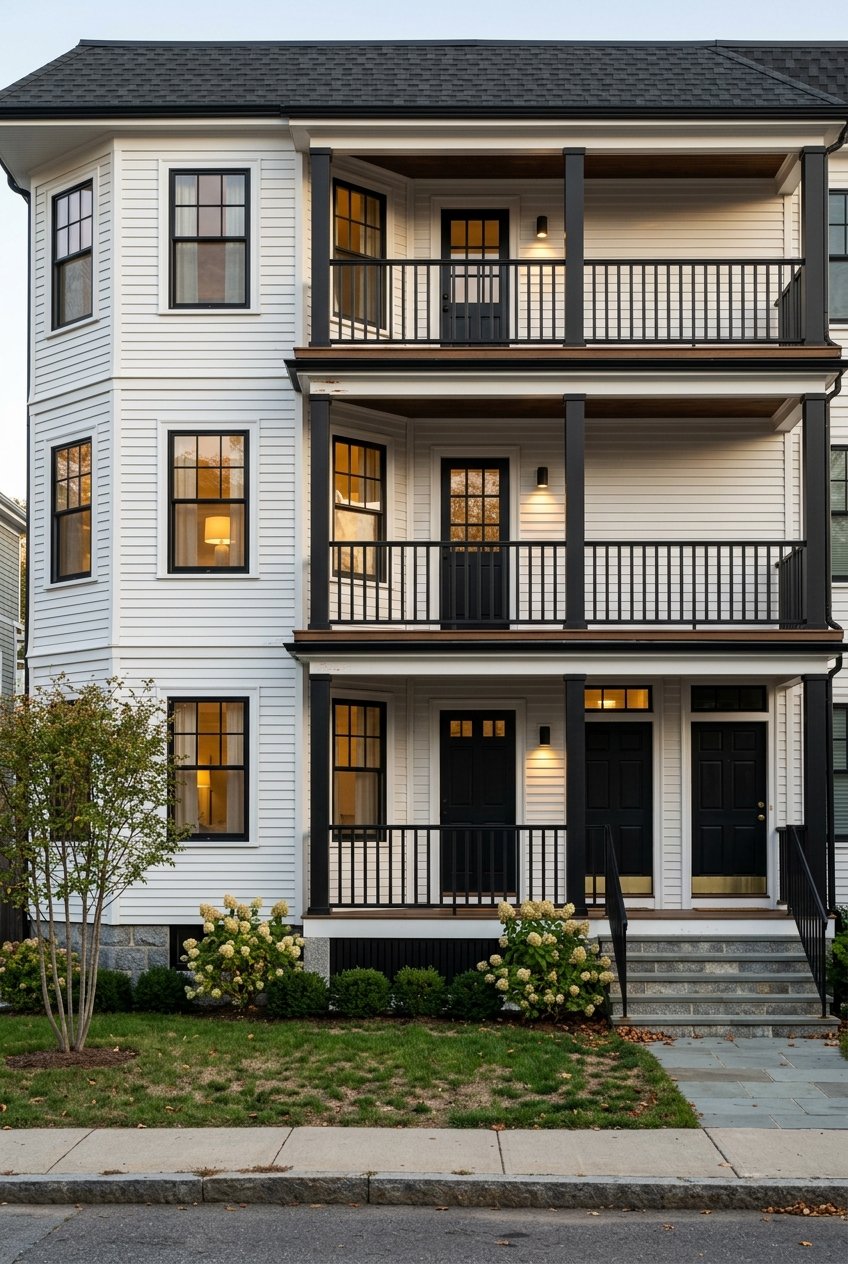
Thinking about buying a two-family or three-family in Cambridge? You are not alone, but this is not a market where small multifamily properties trade like easy starter investments. In Cambridge, these buildings sit inside a dense, high-demand housing market shaped by universities, biotech, and limited supply. If you want to invest here, you need clear numbers, realistic expectations, and a long-term view. Let’s dive in.
Why Cambridge Draws Small Investors
Cambridge has the kind of built-in demand that gets investors’ attention. As of June 30, 2025, the city had 58,966 total housing units, and 66.5% of them were renter-occupied. That matters because it reflects a market where renting is a major part of the housing landscape, not a side category.
Small multifamily also has real roots here. Cambridge reports that 11.9% of dwelling units are in 2-unit properties and 10.5% are in 3-unit properties. These buildings are not rare one-off opportunities. They are part of the city’s long-standing housing fabric.
What the Small-Multifamily Stock Looks Like
Cambridge includes a mix of older single-family homes, triple-deckers, and mixed-use buildings with housing above storefronts. That variety gives buyers multiple property types to evaluate, but it also means condition, layout, and renovation needs can vary widely from one building to the next.
The city’s 2016 housing profile helps explain why this segment matters so much. At that time, two-family buildings accounted for 6,976 units and 31.3% of residential properties, while three-family buildings accounted for 6,216 units and 18.6% of residential properties. Even though larger buildings now hold most total units, the 2- and 3-family market remains central to how Cambridge housing works.
Why Tenant Demand Stays Strong
Cambridge has unusually durable rental demand because it is supported by both higher education and employment. The city’s 2025 Town Gown reports say 14,920 students lived in dormitories in Cambridge, and 29,861 Cambridge residents were enrolled in college or graduate school. Harvard reported 24,317 degree-seeking students in fall 2025, and MIT reported 11,816 students in October 2025.
That student presence matters, but it is only part of the story. Faculty, postdocs, staff, researchers, and young professionals also help support demand for well-located two- and three-bedroom units. For a small investor, that creates a deeper renter pool than you might find in a market driven by one employer or one tenant type.
The job base adds another layer of stability. Cambridge reported 151,304 average jobs in 2023, along with a 1.26 jobs-for-every-resident ratio. Higher education employed more than 21,500 people, and eight of the city’s top 25 employers were in biotech and pharmaceuticals.
Workforce data supports that picture. In 2024, professional and business services made up 43.5% of employees covered by unemployment insurance, while education and health services made up 29.3%, and information made up 7.1%. In practical terms, that helps explain why housing near transit, universities, and major job centers tends to stay competitive.
The Core Challenge: Price Versus Rent
This is where many first-time investors have to reset expectations. Cambridge can offer strong demand, but high demand does not automatically mean strong cash flow on day one. The key issue is that acquisition prices are very high relative to rents.
In 2024, the median market-rate sale price was $1,542,500 for a two-family home and $1,822,500 for a three-family home. Meanwhile, 2025 third-quarter median asking rents were $2,200 for a studio, $2,785 for a one-bedroom, $3,400 for a two-bedroom, and $3,900 for a three-bedroom. Those rent figures exclude affordable housing and university-controlled properties.
For small investors, that means the numbers often feel tighter than expected. You may be buying into long-term stability and future upside, but you are usually not buying a low-basis property with easy margin. In Cambridge, underwriting discipline matters more than optimism.
Financing Can Be the Deciding Factor
Financing is one of the biggest practical hurdles in the Cambridge multifamily market. For 2026, Middlesex County conforming loan limits are $1,232,250 for two-unit properties and $1,489,500 for three-unit properties. Both figures sit below Cambridge’s 2024 median sale prices for those property types.
That gap is important. The median Cambridge two-family price is about 25.2% above the conforming two-unit limit, and the median three-family price is about 22.4% above the conforming three-unit limit. In many cases, that means buyers may need jumbo financing, more cash down, or a stronger overall borrower profile.
For owner-occupants trying to house-hack, FHA can still be relevant because FHA loans may allow down payments as low as 3.5% on 1- to 4-unit properties. But there is a major catch for larger small multifamily purchases. HUD requires 3- and 4-unit properties to pass a self-sufficiency test based on rental income versus principal, interest, taxes, and insurance.
If you are thinking about a three-family in Cambridge, that rule can change the whole strategy. A deal that looks manageable at first glance may not meet financing standards once the income math is tested. That is why strong pre-approval, rent analysis, and property-specific underwriting are essential before you make an offer.
Why Cambridge Favors a Long-Hold Strategy
Cambridge usually works better as a long-term operating asset than a quick-turn investment. High purchase prices, meaningful transaction costs, and demanding compliance requirements make it harder to rely on short-term appreciation or easy value-add assumptions.
Instead, the market tends to reward buyers who stay disciplined over time. That often means focusing on tenant stability, unit condition, careful renovation planning, and consistent management. In a market like this, durability can matter more than immediate yield.
Zoning Changes Matter, but Not Overnight
In February 2025, Cambridge changed its zoning so all residential neighborhoods now allow multifamily housing citywide. In general, the rules allow up to four stories by right, and up to six stories on lots over 5,000 square feet when 20% of the residential floor area is inclusionary.
For small investors, this does not suddenly make existing two- and three-family buildings cheaper or easier to acquire. What it does do is affect the long-term supply picture and redevelopment potential in parts of the city. Over time, that can influence how certain sites compete with existing housing stock.
Compliance Is Part of Ownership
Cambridge ownership comes with operating rules that buyers should take seriously. For example, the city’s short-term rental rules allow only operator-occupied or owner-adjacent short-term rentals, and they require registration and inspection. The city also notes that inclusionary or income-restricted units are not eligible.
That means many investors cannot simply plan on using a property as a fully flexible short-term rental asset. If that is part of your investment idea, you need to understand the city’s rules before you buy, not after.
Landlords also need to account for tenant-related requirements. Cambridge’s Tenants Rights and Resources Notification Ordinance requires landlords to provide tenant-rights information at the start of tenancy and again when legal steps to terminate a tenancy are taken. In other words, buying the asset is only step one. Running it correctly is part of the investment model.
How Cambridge Compares Nearby
If you are deciding between Cambridge and nearby markets, pricing is one of the clearest differences. Somerville’s median sale price over the last three months was about $1.0 million, which is still expensive but materially below Cambridge’s median two- and three-family prices.
That does not automatically make one market better than the other. Cambridge asks for a higher entry price, but it also offers stronger institutional demand, a dense job base, and a deeply established rental ecosystem. If your goal is long-term urban rental demand, Cambridge can be compelling. If you need a lower entry point or more forgiving cash flow, nearby alternatives may deserve a look.
What Small Investors Should Watch Closely
If you are evaluating Cambridge multifamily opportunities, pay close attention to a few basics:
- Entry price relative to rent
- Financing structure and down payment needs
- Unit mix and achievable rent levels
- Property condition and renovation scope
- Transit access and proximity to job centers
- Ongoing compliance and management requirements
In this market, strong investing is usually less about finding a hidden bargain and more about avoiding a weak structure. A property can still be a smart buy, but only if the numbers, financing, and long-term plan all work together.
The Bottom Line on Cambridge Multifamily
Cambridge remains one of the more compelling small multifamily markets in Massachusetts for buyers who want durable rental demand and long-term relevance. Two- and three-family homes still matter here because they are part of the city’s housing foundation, not just a niche product.
At the same time, this market is not forgiving. Prices are high, financing can be complex, and compliance is part of ownership from day one. If you approach Cambridge with patience, careful underwriting, and a realistic hold strategy, you are far more likely to make a smart decision.
If you want help evaluating a Cambridge multifamily purchase with a clear eye on pricing, financing, and deal structure, Henry Rowe can help you think through the numbers and the process with confidence.
FAQs
What makes Cambridge multifamily attractive for small investors?
- Cambridge offers durable rental demand supported by a renter-heavy housing base, major universities, and a large employment ecosystem tied to higher education, biotech, and professional services.
Are two-family and three-family properties common in Cambridge?
- Yes. Cambridge reports that 11.9% of dwelling units are in 2-unit properties and 10.5% are in 3-unit properties, making small multifamily a meaningful part of the city’s housing stock.
Why is Cambridge multifamily hard to cash flow right away?
- Median purchase prices for two-family and three-family homes are very high relative to local asking rents, which can make immediate returns tighter than many buyers expect.
Do Cambridge multifamily buyers often need jumbo financing?
- In many cases, yes. Cambridge’s 2024 median prices for two-family and three-family homes sit above 2026 Middlesex County conforming loan limits for those property types.
Can you house-hack a three-family property in Cambridge?
- Potentially, yes, but financing can be more demanding because FHA requires 3-unit and 4-unit properties to meet a self-sufficiency test based on rental income and housing expenses.
How do Cambridge short-term rental rules affect investors?
- Cambridge allows only operator-occupied or owner-adjacent short-term rentals under registration and inspection rules, so many buyers cannot treat a multifamily property as a fully flexible short-term rental investment.
Is Cambridge better than nearby markets for multifamily investing?
- Cambridge offers strong long-term demand and a dense rental ecosystem, but it also has a higher entry cost than nearby markets like Somerville, so the better choice depends on your budget and strategy.